BIN Mentee Spotlight: Bridget Nwazue
From Light to Sound: Exploring Modern Neuromodulation Therapies
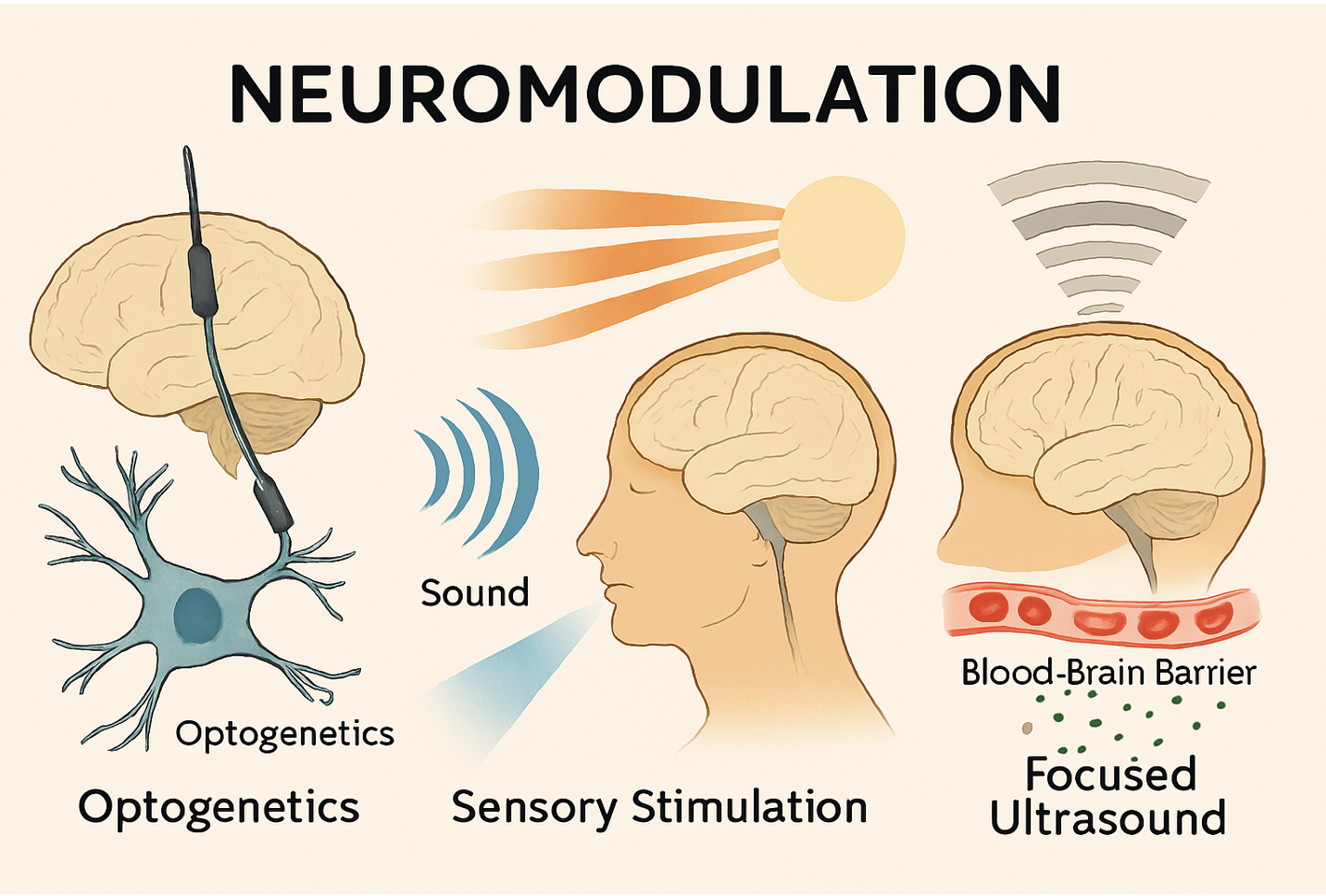
Image created with Azure Open AI ImageGen
Neurotherapeutics, the cutting-edge technology that bridges the worlds of neuroscience and medical therapeutics by using neuromodulation, stands as one of the exciting frontiers in the management and treatment of neurological disorders.
As a geneticist, I see neuromodulation as similar to gene regulation: just as genes can be turned on or off to influence health, neuromodulation can regulate neural cells to restore balance in the brain.
Recent studies, including those by Zhi et al. (2025) and Durham et al. (2024), highlight both genetic and non-genetic approaches to neuromodulation. Among these, optogenetics, sensory stimulation therapy, and focused ultrasound stand out as promising techniques.
Neuromodulation can be achieved via two ways, via:
1. Genetic Neuromodulation methods which include optogenetics, chemogenetics, sonogenetics, and magnetogenetics.
2. Non-genetic Neuromodulation methods which include deep brain stimulation, transcranial magnetic stimulation, transcranial direct current stimulation, transcranial ultrasound stimulation, sensory stimulation therapy and multi-physical-factor stimulation.
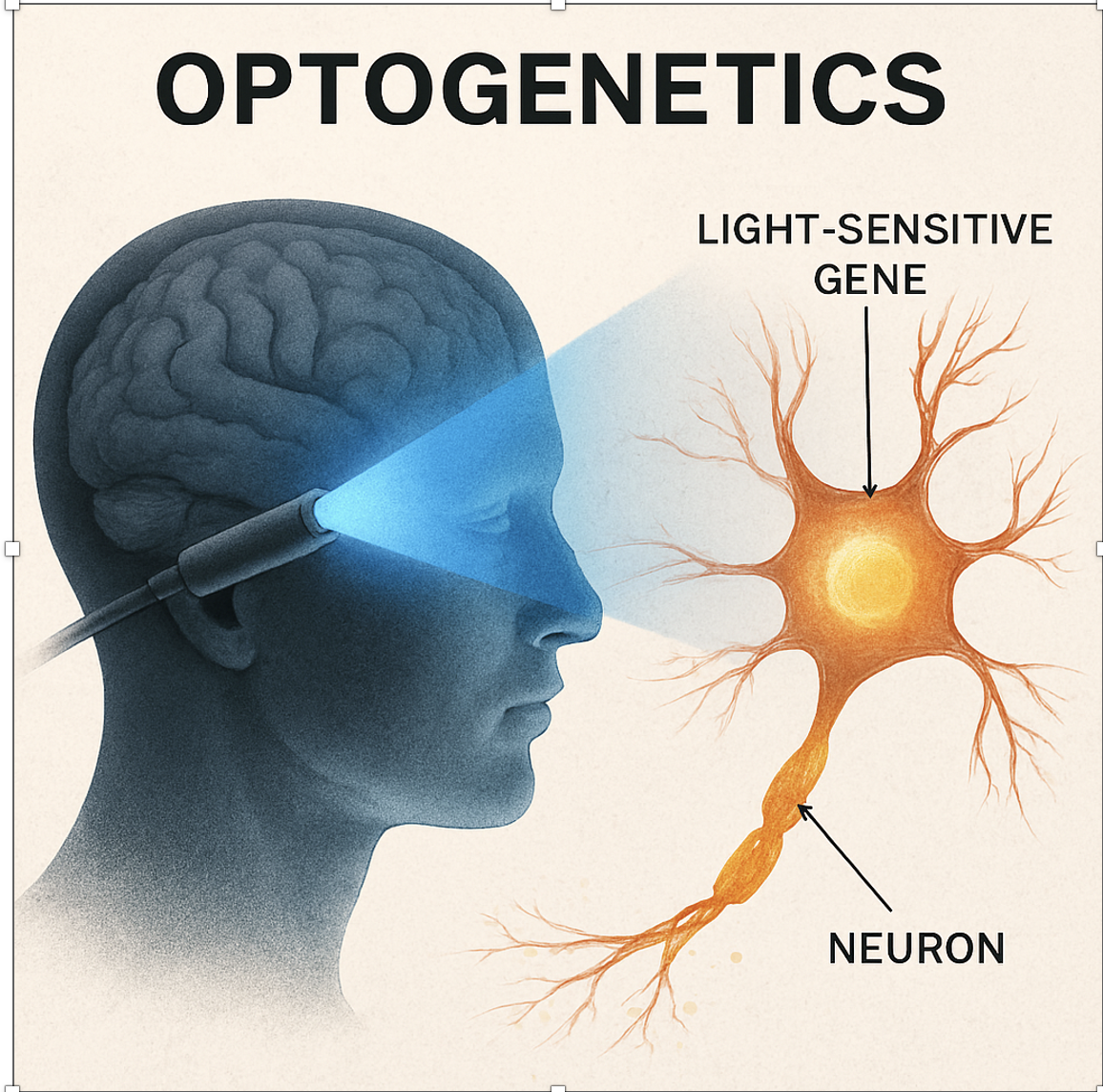
Image created with Azure Open AI ImageGen
Optogenetics: Precision control with Light
Optogenetics uses light-sensitive proteins (genes), such as channelrhodopsin or halorhodopsin, to act like switches for neurons. When exposed to specific wavelengths of light, these proteins can turn neurons on or off, giving researchers precise control over brain activity. The recent applications of optogenetics include genome editing, the activation and inhibition of genes (e.g., preventing oncogene-induced tumour formation), synaptic communication, and even experiments where false memories were implanted in mice — showing its unprecedented precision. Clinically, optogenetics offers hope for neurodegenerative disorders. For example, Fernandez Garcia et al. (2020) demonstrated that optogenetic stimulation improved motor function and restored synaptic balance in a mouse model of Huntington’s disease. Optogenetics has also been used to restore vision in patients with retinitis pigmentosa (tunnel vision), proving that light can indeed be a therapeutic tool.
However, challenges remain. Light does not easily penetrate body tissues; traditional methods require invasive optical fibres, which can affect patient comfort, and constant exposure to light also risks tissue damage by the heat generated. To address these issues, researchers have developed wireless platforms, red-shifted opsins (which use safer wavelengths), and closed-loop systems that adjust stimulation in real time.
A recent publication by The New York Times shows that Elon Musk’s Neuralink has tested optogenetic devices in human trials. Although the identities of trial subjects remain undisclosed, the outcomes already highlight the promise of optogenetics.
Optogenetics—using light-sensitive proteins to switch neurons on and off with precision.
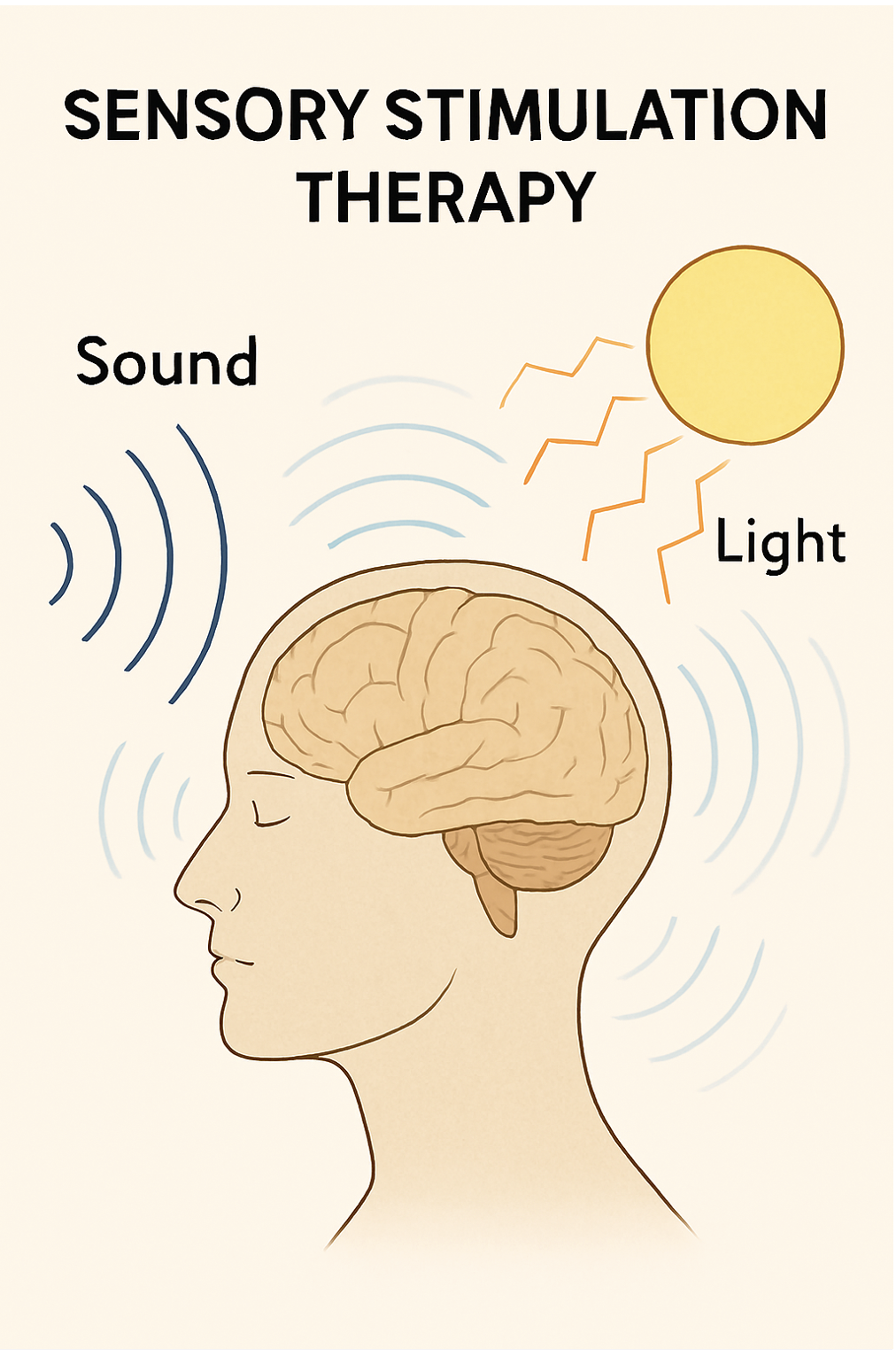
Image created with Azure Open AI ImageGen
Sensory Stimulation Therapy (SST): Healing Through Engaging the Senses.
While optogenetics relies on light-sensitive genes, sensory stimulation takes a broader approach by engaging the brain through everyday senses by using sound, visible light, and other sensory inputs to modulate neural oscillations. By adjusting these patterns, researchers aim to improve memory, mood, and overall cognitive function. Bright light therapy, for instance, has shown benefits in Alzheimer’s patients by regulating sleep cycles and enhancing cognition.
One of the most notable advances comes from Prof. Li Huei Tsai’s team at MIT. In 2022, they developed Gamma ENtrainment Using Sensory stimulation (GENUS), which uses light or sound at a 40 Hz frequency. Whole brain analysis of both light and sound gamma band stimulation indicated reduced amyloid plaques and phosphorylated tau proteins—key drivers of Alzheimer’s disease—while triggering a significant activation of microglial cells and astrocytes that enhances blood vessel function in the brain. GENUS represents a non-drug approach that engages the brain’s natural rhythms to fight disease.
Sensory Stimulation Therapy: Sound and light rhythms engaging the brain to improve cognition.
Focused Ultrasound: Disrupting the Triple-B
The blood-barrier-barrier (BBB), or triple-B, is the first line of defence against pathogens and toxins getting to the brain. Due to this fact, delivery of therapeutics to the CNS can be quite tricky, but ultrasound-mediated BBB disruption has emerged as a promising non-invasive technique to enhance drug delivery to the brain. FUS-BBB0 (Focused Ultrasound Blood-Brain Barrier Opening) can safely assess brain functionality and effect long-lasting neurocognitive changes in the treatment of AD.
Clinical trials at West Virginia University and Cornell University between October 2018 and May 2019 tested FUS in patients with early Alzheimer’s disease. Using ultrasound to target specific brain regions, researchers achieved BBB opening in all treatments, with closure occurring within 24 hours. Importantly, no serious side effects were reported. These results show that FUS can safely and effectively enhance drug delivery, paving the way for broader applications in neurological care.
To wrap up, neuromodulation techniques offer varied and substantial benefits no matter what approach is being used. Each approach has unique strengths: optogenetics offers precision, sensory stimulation engages natural rhythms, and focused ultrasound breaks through physical barriers. Together, they represent a future where neurological diseases can be managed with greater accuracy and fewer side effects. Optimizing genetic methods, refining non-invasive tools, and ensuring safety will help unlock the full potential of neuromodulation, which I strongly believe is the future of neuroscience.
References
Durham P.G., Butnariu A, Alghorazi R, Pinton G, Krishna V, Dayton P.A. Current clinical investigations of focused ultrasound blood-brain barrier disruption: A review. Neurotherapeutics, Volume 21, Issue 3, e00352.
Katrin Bennhold. The World: The privacy battle in our minds. The New York Times. 2025-11-21.
Zhi W, Li Y, Wang L, Hu X. Advancing Neuroscience and Therapy: Insights into Genetic and Non-Genetic Neuromodulation Approaches. Cells. 2025; 14(2):122. https://doi.org/10.3390/cells14020122

Bridget Nwazue is a geneticist based in Lagos, Nigeria, with a growing interest in applying artificial intelligence and genetic engineering to neuroscience research. Outside her academic pursuits, Bridget enjoys reading and finds inspiration in music—especially the soulful sounds of Coldplay and James Arthur.
Contact - LinkedIn